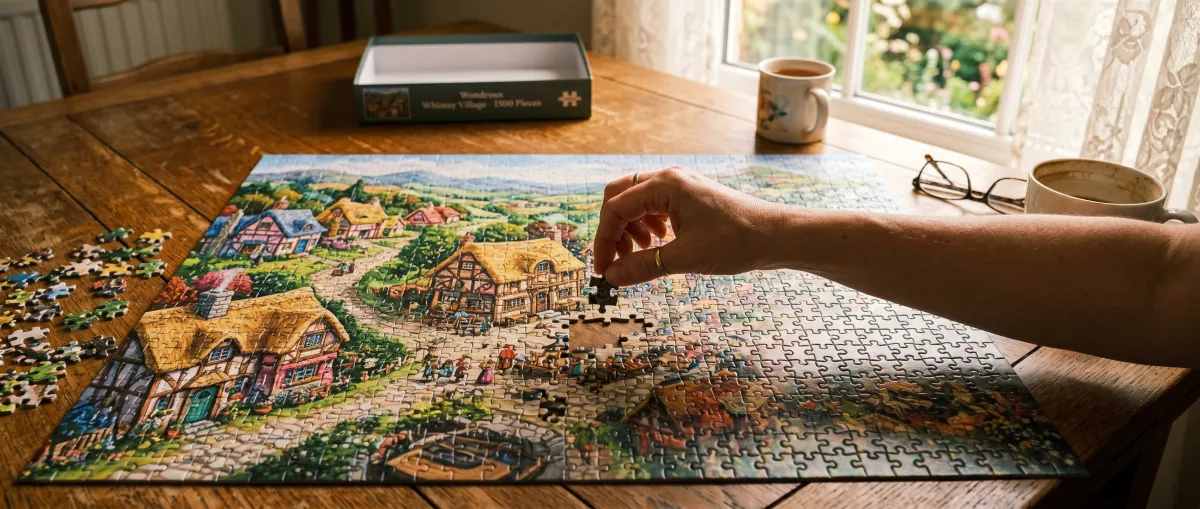
When The Pieces Just Don't Fit
My cousin handed me a puzzle when I arrived for my peninsula adventure, a 1,500-piece jigsaw of a whimsical landscape, brightly colored houses tumbling across a scene that looked more like someone's fantasy than any place on a map. I love the challenge of a good jigsaw puzzle. I set it up on the large square dining room table and got to work.
Edges first. Then the sky, then the rooftops, section by section. I was making real progress.
And then I started finding pieces that didn't work.
Not the obvious ones you pick up, turn over twice, and put back down. I mean the ones I had already placed. Pieces I had pressed firmly into position because the color was close enough, the shape seemed right, and I had been working on that section long enough to need a small victory. I had built entire clusters around them. And now here was the actual piece, the one that truly belonged, with no room for it because I had already decided the matter was settled.
The first time it happened, I laughed. By the fourth time, I wasn't seeing the humor in it.
There is something uncomfortable about removing a piece I was so sure about. It didn't just displace that one piece. It shifted everything around it. The clusters I had built carefully suddenly wobbled. Sections I thought were solid needed to be reconsidered. And the stubborn part of me kept looking for another explanation. Maybe the piece next to it was wrong. Maybe I could make this work if I just adjusted a few things around it.
I've watched myself do this more than once. Keep rearranging what surrounded the wrong piece instead of honestly reconsidering the one at the center.
I've had considerable experience with this. Sadly, not just with puzzles.
When a marriage ends, or a relationship we believed in finally falls apart, one of the underlying questions that eventually surfaces is, how did I not see this? Because most of us feel so sure. We weren't careless. We looked at the shape of the thing and it seemed right. The boxes were checked. We pressed it into place and built a life around it.
What I've come to understand, in my own life and in the work I do with people navigating life when the pieces no longer fit, is that being wrong about a person isn't the same as being foolish. Most of the time, we were working with what we could see. Or, if we're being honest, what we were willing to see. The shape and the color told one story. The interior told another, one we couldn't read until we were already fully committed to the position.
And the more we have built around a choice, the harder it is to remove it, even when something in us knows. Because removing it means more than admitting a mistake. It means accepting that everything constructed around it may need to shift too. The life that made sense, or looked like it did. The story we told, including the one we told ourselves.
When I finally took out the wrong piece, something released. Things that had been strained suddenly had room. The right pieces found their places without force.
Before I boxed up the finished puzzle to return it to my cousin, I took a picture of it. All 1,500 pieces in their right places, that improbable fantasy landscape finally whole. It looked nothing like the mess on the table in the weeks before, when I couldn't yet see where anything was going.
It never does, in the middle.
Love & Light,


